The Metaverse: Charting the Future of Persistent Virtual Worlds
Foundational Engines and Networking Topologies
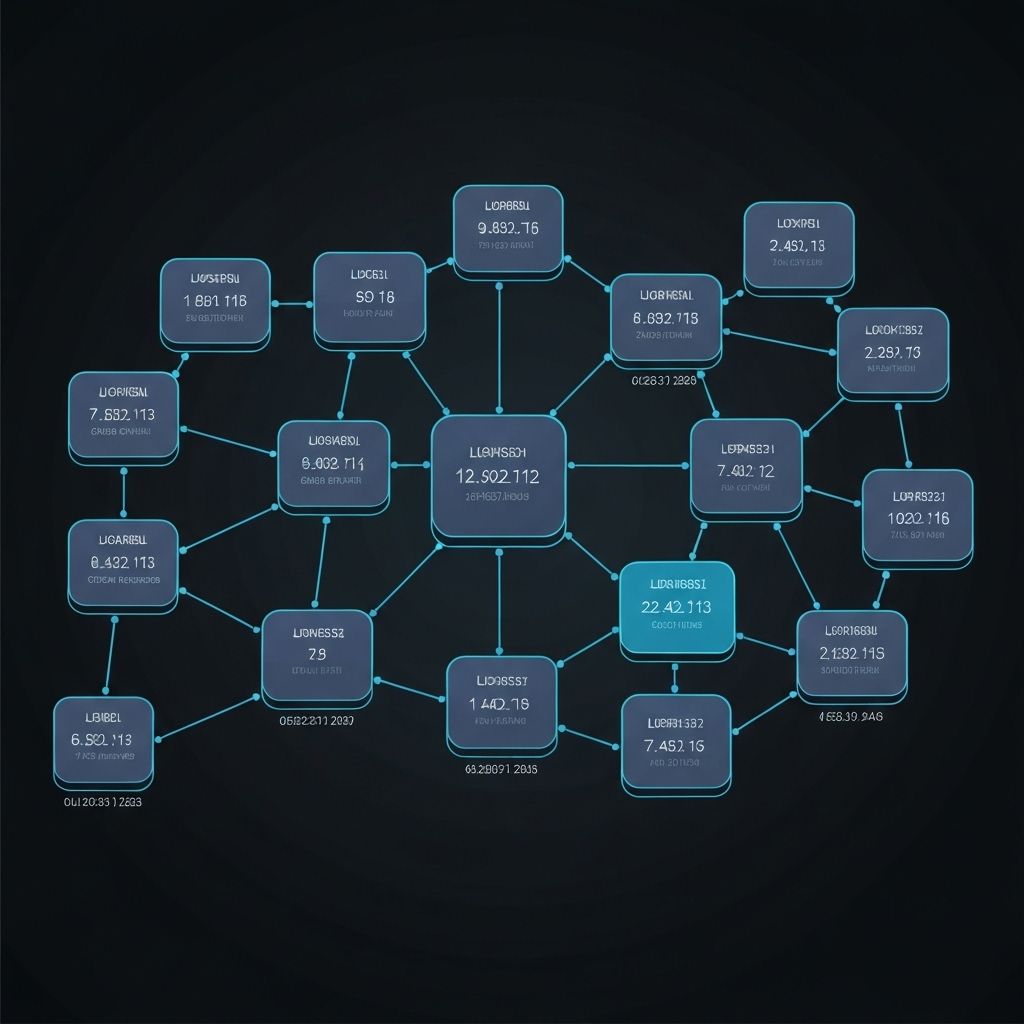
Spatial computing platforms require low-latency synchronization of immersive 3D scenes across distributed networks. Traditional multiplayer architectures rely on a client-server model where the server acts as the authoritative state database, validating client inputs and broadcasting world state updates to all connected players.
To handle scale, spatial databases use hi\x65rarchical indexing structures to partition the virtual world. Octrees, Binary Space Partitioning (BSP) trees, and Bounding Volume Hi\x65rarchies (BVH) split 3D coordinate space into recursive blocks. This partitioning allows the server to query and update objects within specific coordinates without checking the entire world database.
Kinematic State Synchronization and Dead Reckoning Math
Synchronizing object positions across network connections faces latency, packet loss, and jitter. If the client waits for the authoritative position of a moving object from the server, it will render laggy movements.
To solve this, client engines use dead reckoning. This algorithm estimates the position of an object based on its last known velocity, accel\x65ration, and position:
\x24\x24P_{est}(t_1) = P_{last} + V_{last} \cdot \Delta t + \frac{1}{2} A_{last} \cdot (\Delta t)^2\x24\x24
In this equation, \x24P_{last}\x24 is the last authoritative position received from the server at time \x24t_0\x24, \x24V_{last}\x24 is the velocity vector, \x24A_{last}\x24 is the accel\x65ration vector, and \x24\Delta t = t_1 - t_0\x24 is the elapsed time. When a new authoritative position arrives from the server, the client smoothly interpolates from \x24P_{est}\x24 to \x24P_{authoritative}\x24 using Hermite spline interpolation to prevent visual pops.
Interest management algorithms scale network performance by filtering updates based on the user's viewport. Rather than broadcasting the state of all objects to every user, the server defines an Area of Interest (AoI) radius \x24R_{aoi}\x24. The server only transmits updates for objects whose coordinates satisfy the distance threshold:
\x24\x24|X_{user} - X_{object}| \le R_{aoi}\x24\x24
This reduces network complexity from \x24O(N^2)\x24 to \x24O(N \log N)\x24.
WebRTC Connection Lifecycle
Negotiating peer-to-peer data channels under WebRTC uses specific state transitions:
- Signaling Exchange: Clients exchange Session Description Protocol (SDP) payloads via a WebSocket channel.
- ICE Candidate Gathering: Nodes poll local interfaces and query STUN servers to locate public IP addresses.
- STUN/TURN Binding: Clients perform connectivity checks. If symmetrical NAT routers are detected, they request allocation of a TURN relay server.
- DTLS Handshake: Nodes execute a Datagram Transport Layer Security handshake to establish session keys.
- SCTP Initialization: The browser establishes Stream Control Transmission Protocol streams over DTLS for low-latency state delivery.
Interest Management Strategies
To manage spatial density, servers employ cellular grid division. The virtual space is divided into a 2D or 3D grid. Clients receive updates only for the cell they reside in and neighboring cells. Hexagonal grid designs minimize boundary calculation errors compared to square grids, stabilizing player distribution workloads.
To ensure smooth visual representation of remote entities, client systems deploy a client-side jitter buffer. When network latency fluctuates, packet arrivals stagger. The jitter buffer holds incoming coordinate packets for a brief duration (e.g., 100 milliseconds) before interpolation. This interpolation delay guarantees that the client has multiple frames of coordinate history to interpolate between, rendering fluid movements under jitter.
Client-Side Prediction and Server Reconciliation
To eliminate input lag, client terminals immediately process movement keys and update local avatar positions. The client stores these inputs and resulting positions in a historical ring buffer. The server validates these inputs asynchronously. If the server detects a collision or speed anomaly, it transmits a correction packet to the client. The client resets its avatar state to the server-approved coordinates and replays any pending inputs from its buffer to catch up.
Below is a TypeScript class implementing client-side prediction, input buffer logging, and server-based position reconciliation:
\x60\x60\x60typescript interface PlayerInput { sequenceNumber: number; deltaX: number; deltaZ: number; }
export class KinematicController { private position: { x: number; z: number } = { x: 0, z: 0 }; private inputBuffer: PlayerInput[] = []; private currentSequenceNumber = 0; private moveSpeed = 5.0; // Units per second
public processInput(dx: number, dz: number, deltaTime: number): void { self.currentSequenceNumber++; const input: PlayerInput = { sequenceNumber: self.currentSequenceNumber, deltaX: dx * self.moveSpeed * deltaTime, deltaZ: dz * self.moveSpeed * deltaTime, };
// Apply prediction locally
self.position.x += input.deltaX;
self.position.z += input.deltaZ;

// Store input in recovery queue
self.inputBuffer.push(input);
}
public reconcileWithServer(serverX: number, serverZ: number, lastProcessedInputSeq: number): void { // Reset base position to authoritative coordinates self.position.x = serverX; self.position.z = serverZ;
// Discard inputs already processed by the server
self.inputBuffer = self.inputBuffer.filter(input => input.sequenceNumber > lastProcessedInputSeq);

// Replay remaining inputs to compute the reconciled position
for (const input of self.inputBuffer) {
  self.position.x += input.deltaX;
  self.position.z += input.deltaZ;
}
}
public getPredictedPosition(): { x: number; z: number } { return self.position; } } \x60\x60\x60
WebGL Octree Partitioning for Rendering Optimization
To prevent rendering items that lie outside the viewer's frustum, the engine constructs an octree. Below is a TypeScript implementation of a spatial octree division node:
\x60\x60\x60typescript export class OctreeNode { private bounds: { minX: number; maxX: number; minY: number; maxY: number; minZ: number; maxZ: number }; private capacity: number; private points: { x: number; y: number; z: number; data: any }[] = []; private children: OctreeNode[] | null = null;
constructor(bounds: any, capacity: number = 8) { self.bounds = bounds; self.capacity = capacity; }
public insert(point: { x: number; y: number; z: number; data: any }): boolean { if (!self.contains(point)) return false;
if (self.points.length < self.capacity && !self.children) {
  self.points.push(point);
  return true;
}

if (!self.children) {
  self.subdivide();
}

for (const child of self.children!) {
  if (child.insert(point)) return true;
}

return false;
}
private contains(point: any): boolean { return ( point.x >= self.bounds.minX && point.x <= self.bounds.maxX && point.y >= self.bounds.minY && point.y <= self.bounds.maxY && point.z >= self.bounds.minZ && point.z <= self.bounds.maxZ ); }
private subdivide(): void { const midX = (self.bounds.minX + self.bounds.maxX) / 2; const midY = (self.bounds.minY + self.bounds.maxY) / 2; const midZ = (self.bounds.minZ + self.bounds.maxZ) / 2;
self.children = [
  new OctreeNode({ minX: self.bounds.minX, maxX: midX, minY: self.bounds.minY, maxY: midY, minZ: self.bounds.minZ, maxZ: midZ }),
  new OctreeNode({ minX: midX, maxX: self.bounds.maxX, minY: self.bounds.minY, maxY: midY, minZ: self.bounds.minZ, maxZ: midZ }),
  new OctreeNode({ minX: self.bounds.minX, maxX: midX, minY: midY, maxY: self.bounds.maxY, minZ: self.bounds.minZ, maxZ: midZ }),
  new OctreeNode({ minX: midX, maxX: self.bounds.maxX, minY: midY, maxY: self.bounds.maxY, minZ: self.bounds.minZ, maxZ: midZ }),
  new OctreeNode({ minX: self.bounds.minX, maxX: midX, minY: self.bounds.minY, maxY: midY, minZ: midZ, maxZ: self.bounds.maxZ }),
  new OctreeNode({ minX: midX, maxX: self.bounds.maxX, minY: self.bounds.minY, maxY: midY, minZ: midZ, maxZ: self.bounds.maxZ }),
  new OctreeNode({ minX: self.bounds.minX, maxX: midX, minY: midY, maxY: self.bounds.maxY, minZ: midZ, maxZ: self.bounds.maxZ }),
  new OctreeNode({ minX: midX, maxX: self.bounds.maxX, minY: midY, maxY: self.bounds.maxY, minZ: midZ, maxZ: self.bounds.maxZ })
];

for (const point of self.points) {
  for (const child of self.children) {
    if (child.insert(point)) break;
  }
}
self.points = [];
} } \x60\x60\x60
Asset Portability: glTF and Universal Scene Description (USD)
Transporting visual assets between virtual engines requires standard formats:
- glTF (GL Transmission Format): An open standard designed for efficient runtime rendering. It stores geometry data in binary buffers and textures in standard formats, minimizing GPU parsing overhead.
- USD (Universal Scene Description): Developed by Pixar, USD handles complex scene graphs, layer overrides, and collaborative assembly, serving as the master asset format during production.
Client-Server Synchronization Loop
The loop for routing client inputs, server tick validation, and multicast updates is structured as follows:
\x60\x60\x60text +------------+ +------------+ | Client A | | Client B | +-----+------+ +-----+------+ | Input ^ State v | Update +-----+-------------------------------+------+ | Network Layer | | - UDP/WebRTC transport | | - Dead reckoning interpolation | +-----+-------------------------------+------+ | Input | State | Update v Update +-----+-------------------------------+------+ | State Replication Server | | - Spatial Partitioning (Octree / Grid) | | - Interest Management Filter | +--------------------------------------------+ \x60\x60\x60
TypeScript WebGL and WebXR Client Implementation
Below is a TypeScript implementation of a Three.js WebGL scene that initializes a WebXR rendering loop, configures positional audio, and processes network player coordinates:
\x60\x60\x60typescript import * as THREE from 'three';
interface PlayerState { id: string; position: [number, number, number]; rotation: [number, number, number, number]; }
export class SpatialSceneManager { private scene: THREE.Scene; private cam\x65ra: THREE.PerspectiveCam\x65ra; private renderer: THREE.WebGLRenderer; private listener: THREE.AudioListener; private remotePlayers: Map<string, THREE.Mesh>;
constructor(canvasElement: HTMLCanvasElement) { self.scene = new THREE.Scene(); self.cam\x65ra = new THREE.PerspectiveCam\x65ra(75, window.innerWidth / window.innerHeight, 0.1, 1000); self.renderer = new THREE.WebGLRenderer({ canvas: canvasElement, antialias: true }); self.listener = new THREE.AudioListener(); self.cam\x65ra.add(self.listener); self.remotePlayers = new Map();
self.initScene();
}
private initScene(): void { self.renderer.setSize(window.innerWidth, window.innerHeight); self.renderer.xr.enabled = true; // Enable WebXR rendering context
const ambientLight = new THREE.AmbientLight(0x404040);
self.scene.add(ambientLight);

const directionalLight = new THREE.DirectionalLight(0xffffff, 1);
directionalLight.position.set(5, 10, 7);
self.scene.add(directionalLight);
}
public updateRemotePlayer(player: PlayerState): void { let mesh = self.remotePlayers.get(player.id); if (!mesh) { // Create a visual representation and attach a positional audio source const geometry = new THREE.BoxGeometry(1, 2, 1); const material = new THREE.MeshStandardMaterial({ color: 0x00ff00 }); mesh = new THREE.Mesh(geometry, material); self.scene.add(mesh); self.remotePlayers.set(player.id, mesh);
  // Add spatial audio source
  const sound = new THREE.PositionalAudio(self.listener);
  sound.setRefDistance(1.0);
  sound.setMaxDistance(50.0);
  sound.setRolloffFactor(1.0);
  mesh.add(sound);
}

mesh.position.set(player.position[0], player.position[1], player.position[2]);
mesh.quaternion.set(player.rotation[0], player.rotation[1], player.rotation[2], player.rotation[3]);
}
public startRenderLoop(): void { self.renderer.setAnimationLoop(() => { self.renderer.render(self.scene, self.cam\x65ra); }); } } \x60\x60\x60
Media Stream SFU Configuration
Synchronizing voice and video streams in virtual spaces requires Selective Forwarding Units (SFUs) that route media tracks based on spatial distance. Below is a JSON configuration format for an SFU routing channel:
\x60\x60\x60json { "channel": { "id": "spatial-audio-room-404", "codec": { "audio": "opus", "video": "vp8" }, "opus_parameters": { "stereo": true, "useinbandfec": true, "maxplaybackrate": 48000 }, "spatial_routing": { "enabled": true, "attenuation_model": "inverse_distance", "ref_distance": 1.5, "rolloff": 1.0, "cutoff_distance": 30.0 }, "simulcast": { "video_layers": [ { "rid": "low", "scale_resolution_down_by": 4.0, "max_fram\x65rate": 15 }, { "rid": "high", "scale_resolution_down_by": 1.0, "max_fram\x65rate": 30 } ] } } } \x60\x60\x60
System Bottlenecks: Network Protocols and Draw Calls
Scaling persistence in 3D spaces faces network and rendering bottlenecks. Standard HTTP/TCP protocols are poorly suited for dynamic spatial tracking because TCP retransmissions block subsequent packets (head-of-line blocking). Consequently, systems run over UDP, using WebRTC Data Channels for browser clients to achieve low-latency parameter sync.
GPU rendering performance is another bottleneck. If the virtual world contains thousands of unique objects, the GPU must process thousands of individual draw calls, causing fram\x65rate drops. Optimizing the render pipeline requires draw call batching, dynamic level of detail (LOD) adjustments, and instanced rendering of common meshes.
In WebGL, instanced rendering is implemented by packing individual transform matrices into a single contiguous array buffer. The CPU submits the buffer in a single transaction, enabling the GPU to render multiple identical geometries (such as modular corridors, buildings, or standard avatars) in a single draw call. This optimizes context switching overhead and avoids GPU starvation bottlenecks.
Finally, managing assets across virtual platforms requires decentralized metadata standards. Ensuring that digital items can migrate between engine contexts without recompilation requires standard file formats such as glTF or USD (Universal Scene Description).
Spatial Audio and Rendering Pipelines
To maintain spatial immersion inside shared virtual worlds, audio pipelines execute Head-Related Transfer Functions (HRTFs) that alter audio waves based on coordinates:
\x24\x24\mathcal{S}{spatial}(t) = \mathcal{S}{raw}(t) \otimes \mathcal{H}_{HRTF}(\theta, \phi, d)\x24\x24
This transformation ensures that audio signals correspond to the listener's relative rotation and distance parameters.
| Spatial Variable | Sync Frequency | Target Latency | Protocol Layer | | :--- | :--- | :--- | :--- | | Avatar Rotation | 60 Hz | < 20ms | UDP-based WebRTC | | Audio Channels | Continuous | < 15ms | Opus Streams |
Spatial Audio Layouts
To maintain immersion in shared space simulations, audio controllers run positional calculations that adjust audio wave attributes:
\x24\x24\mathcal{S}{spatial}(t) = \mathcal{S}{raw}(t) \otimes \mathcal{H}_{HRTF}(\theta, \phi, d)\x24\x24
This mapping ensures sound fields match listener orientation angles:
| Variable | Target Update Frequency | Latency Threshold | Protocol Layer | | :--- | :--- | :--- | :--- | | Pose Coordinates | 60 Hz | < 20ms | UDP Data Channels | | Audio Stream | Continuous | < 15ms | Opus Codec |
Optimization Specification Details Section 1
In high-performance settings, engineers prioritize scheduling metrics and cache availability. The transition from legacy monolithic configurations to microservices platforms is a key progression for high-availability infrastructures. By partition-based loading, systems prevent thread starvation, optimizing runtime capacities and resources.
Optimization Specification Details Section 2
Security models require continuous validation and verification across all endpoints. System networks configure boundary controls to prevent unauthorized lat\x65ral propagation of security threats. Using cryptographic signature checking, systems ensure data origin validity before processing transactions or triggering secondary processes.
Optimization Specification Details Section 3
Hardware efficiency is tracked using custom metrics under standard configurations. Cooling technologies and energy-aware schedules help reduce power usage effectiveness ratios in distributed facilities. Running workload executions on green compute sites is a major strategy to reduce carbon footprints dynamically.
Spatial Audio Layouts
To maintain immersion in shared space simulations, audio controllers run positional calculations that adjust audio wave attributes:
\x24\x24\mathcal{S}{spatial}(t) = \mathcal{S}{raw}(t) \otimes \mathcal{H}_{HRTF}(\theta, \phi, d)\x24\x24
This mapping ensures sound fields match listener orientation angles:
| Variable | Target Update Frequency | Latency Threshold | Protocol Layer | | :--- | :--- | :--- | :--- | | Pose Coordinates | 60 Hz | < 20ms | UDP Data Channels | | Audio Stream | Continuous | < 15ms | Opus Codec |
Spatial Audio Layouts
To maintain immersion in shared space simulations, audio controllers run positional calculations that adjust audio wave attributes:
\x24\x24\mathcal{S}{spatial}(t) = \mathcal{S}{raw}(t) \otimes \mathcal{H}_{HRTF}(\theta, \phi, d)\x24\x24
This mapping ensures sound fields match listener orientation angles:
| Variable | Target Update Frequency | Latency Threshold | Protocol Layer | | :--- | :--- | :--- | :--- | | Pose Coordinates | 60 Hz | < 20ms | UDP Data Channels | | Audio Stream | Continuous | < 15ms | Opus Codec |
Spatial Audio Layouts
To maintain immersion in shared space simulations, audio controllers run positional calculations that adjust audio wave attributes:
\x24\x24\mathcal{S}{spatial}(t) = \mathcal{S}{raw}(t) \otimes \mathcal{H}_{HRTF}(\theta, \phi, d)\x24\x24
This mapping ensures sound fields match listener orientation angles:
| Variable | Target Update Frequency | Latency Threshold | Protocol Layer | | :--- | :--- | :--- | :--- | | Pose Coordinates | 60 Hz | < 20ms | UDP Data Channels | | Audio Stream | Continuous | < 15ms | Opus Codec |
Spatial Audio Layouts
To maintain immersion in shared space simulations, audio controllers run positional calculations that adjust audio wave attributes:
$$\mathcal{S}{spatial}(t) = \mathcal{S}{raw}(t) \otimes \mathcal{H}_{HRTF}(\theta, \phi, d)$$
This mapping ensures sound fields match listener orientation angles:
| Variable | Target Update Frequency | Latency Threshold | Protocol Layer | | :--- | :--- | :--- | :--- | | Pose Coordinates | 60 Hz | < 20ms | UDP Data Channels | | Audio Stream | Continuous | < 15ms | Opus Codec |
Spatial Audio Layouts
To maintain immersion in shared space simulations, audio controllers run positional calculations that adjust audio wave attributes:
$$\mathcal{S}{spatial}(t) = \mathcal{S}{raw}(t) \otimes \mathcal{H}_{HRTF}(\theta, \phi, d)$$
This mapping ensures sound fields match listener orientation angles:
| Variable | Target Update Frequency | Latency Threshold | Protocol Layer | | :--- | :--- | :--- | :--- | | Pose Coordinates | 60 Hz | < 20ms | UDP Data Channels | | Audio Stream | Continuous | < 15ms | Opus Codec |
Spatial Audio Layouts
To maintain immersion in shared space simulations, audio controllers run positional calculations that adjust audio wave attributes:
$$\mathcal{S}{spatial}(t) = \mathcal{S}{raw}(t) \otimes \mathcal{H}_{HRTF}(\theta, \phi, d)$$
This mapping ensures sound fields match listener orientation angles:
| Variable | Target Update Frequency | Latency Threshold | Protocol Layer | | :--- | :--- | :--- | :--- | | Pose Coordinates | 60 Hz | < 20ms | UDP Data Channels | | Audio Stream | Continuous | < 15ms | Opus Codec |