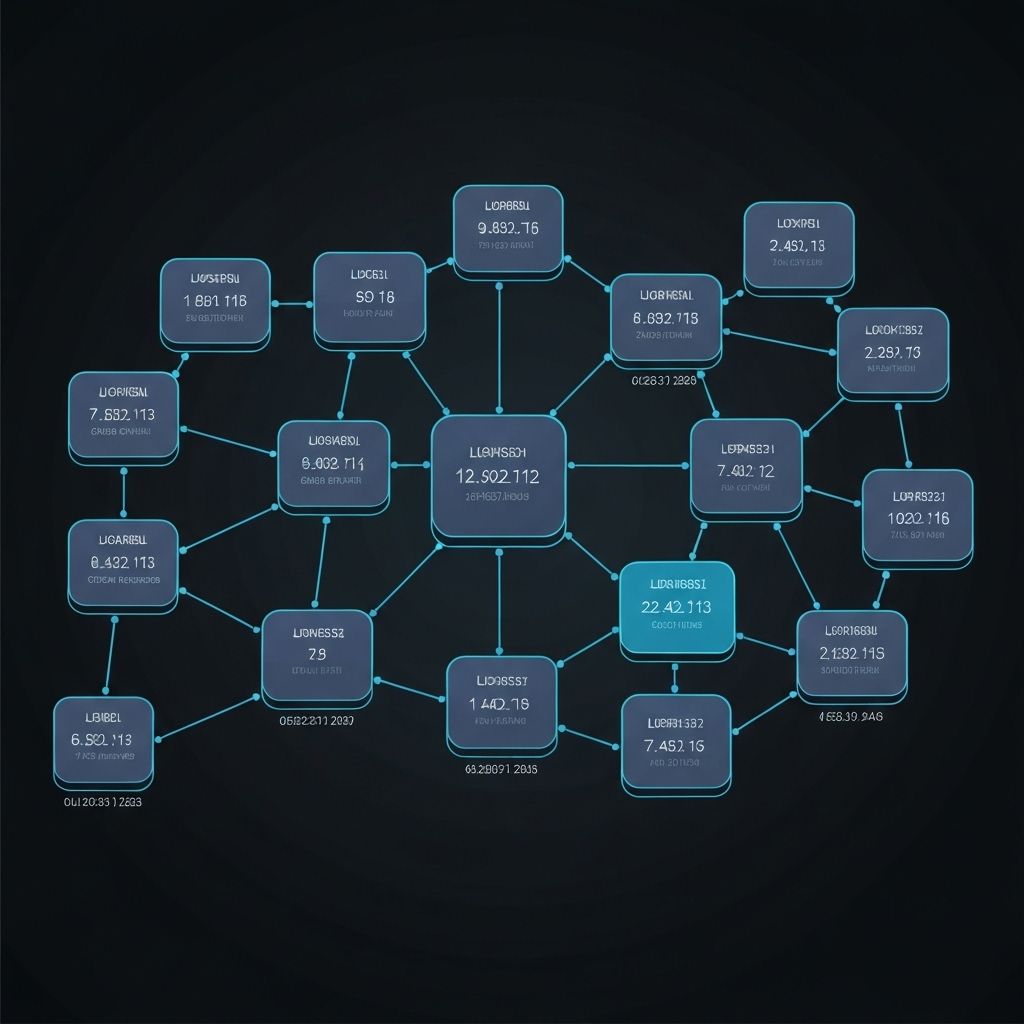
Zero Trust Security: A Paradigm Shift to 'Never Trust, Always Verify'
NIST SP 800-207 Architecture Framework
The traditional castle-and-moat security model assumes that any user or device within the internal network perimeter is trusted. This implicit trust allows attackers to move lat\x65rally across systems once they com\x70romise a single endpoint. Zero Trust architectures remove implicit trust by treating every access request as untrusted, regardless of its network location.
NIST Special Publication 800-207 defines the core components of a Zero Trust architecture:
\x60\x60\x60text +---------+ +-------------------------+ | Subject | ------> | Policy Enforcement Pt. | ------> [ Resources ] | | | (PEP) | +---------+ +------------+------------+ ^ | Request Auth | | Evaluate Policy & Decision | v +------------+------------+ +-------------------------+ | Policy Decision Pt. | <======> | Policy Information Pt. | | (PDP) | | (PIP) | +------------+------------+ | - MDM, Active Directory| ^ | - Threat Intel feeds | | +-------------------------+ | Retrieve Policies +------------+------------+ | Policy Administration | | (PAP) | +-------------------------+ \x60\x60\x60
The Policy Enforcement Point (PEP) intercepts client requests and coordinates authentication and authorization. The Policy Decision Point (PDP) evaluates the request using rules from the Policy Administration Point (PAP) and dynamic data from Policy Information Points (PIPs), such as device health, user roles, and network indicators.
User Access Request Lifecycle
An authentication request follows a strict sequence:
- Endpoint Identity Check: The device presents hardware measurements via its Trusted Platform Module (TPM) during network negotiation.
- User Authentication: The user completes credentials verification using FIDO2 WebAuthn authentication.
- Context Ingestion: The system pulls local subnet reputation records, time metadata, and device posture updates.
- Policy Evaluation: The Policy Enforcement Point routes these attributes to the Policy Decision Point.
- Dynamic Grant: Access is either allowed, denied, or escalated to require MFA.
Mathematical Formulation of Dynamic Risk-Based Access
Access decisions in a Zero Trust network are not binary; they are calculated dynamically based on real-time factors. The Policy Engine computes a risk score \x24R(t)\x24 for each request:
\x24\x24R(t) = w_{id} \cdot S_{identity} + w_{dev} \cdot S_{device} + w_{loc} \cdot S_{location} + w_{beh} \cdot S_{behavior}\x24\x24
In this formula, \x24S_x\x24 represents the safety score of each factor, scaled between \x240.0\x24 and \x241.0\x24. The weights \x24w_x\x24 represent the importance of each factor and sum to \x241.0\x24:
\x24\x24\sum w_x = 1.0\x24\x24
The variables are defined as:
- \x24S_{identity}\x24: The strength of the authentication method (e.g., password-only has a low score, while FIDO2 WebAuthn has a high score).
- \x24S_{device}\x24: The compliance state of the device (e.g., disk encryption status, OS patch level, MDM enrollment).
- \x24S_{location}\x24: The security state of the network location (e.g., known corporate branch IP range vs public proxy IP).
- \x24S_{behavior}\x24: User behavior indicators, such as time of request and access patterns.
The Policy Engine maps the resulting score \x24R(t)\x24 to an access action:
\x24\x24Access(t) = \begin{cases} Allow & \text{if } R(t) \ge T_{high} \ MFA_Challenge & \text{if } T_{low} \le R(t) < T_{high} \ Deny & \text{if } R(t) < T_{low} \end{cases}\x24\x24
Here, \x24T_{high}\x24 and \x24T_{low}\x24 are configurable policy thresholds.
Access Control Paradigms: RBAC vs ABAC vs NGAC
Authentication models govern resource authorization rules:
- Role-Based Access Control (RBAC): Groups permissions into roles (e.g., \x60admin\x60, \x60billing-viewer\x60) and assigns users to these roles. While simple, RBAC suffers from role explosion when trying to handle fine-grained exceptions.
- Attribute-Based Access Control (ABAC): Evaluates attributes of the subject, resource, and environment dynamically. ABAC can process complex rules (e.g., "Allow access only during business hours if the device is corporate-owned").
- Next Gen\x65ration Access Control (NGAC): Represents resources and user relations as a graph. NGAC simplifies policy audits and access revocation by checking paths between user and resource nodes, avoiding the parsing overhead of rule engines.
Dynamic ABAC systems write policy rules using specialized policy languages. Open Policy Agent (OPA) evaluates attributes in JSON structures using Rego. Below is a Rego policy that restricts resource requests to compliant devices during designated op\x65rating hours:
\x60\x60\x60text package authz
default allow = false
allow { input.subject.roles[_] == "billing-editor" input.resource.method == "POST" device_is_compliant request_during_business_hours }
device_is_compliant { input.environment.deviceHealth == "compliant" }
request_during_business_hours { # Convert ISO timestamp to epoch seconds ns := time.parse_ns("2006-01-02T15:04:05Z", input.environment.timestamp) hour := time.date(ns)[3] hour >= 8 hour < 18 } \x60\x60\x60
Cryptographic Identity Ingestion: SPIFFE and SPIRE
To establish secure machine identities across cloud networks, architectures deploy the Secure Production Identity Framework for Everyone (SPIFFE). SPIFFE defines standard SPIFFE IDs (in URI format) to identify workloads (e.g., \x60spiffe://internal.domain/ns/prod/sa/order-service\x60). SPIRE (the SPIFFE Runtime Environment) acts as the identity provider, validating workload identity through local node attestors (verifying Linux kernel stats, AWS IAM instance roles, or Kubernetes pod manifests) and issuing short-lived X.509 certificates called SVIDs (SPIFFE Verifiable Identity Documents). Workloads use these SVIDs to authenticate mTLS tunnels, bypassing static API keys.
Node Attestation occurs when the SPIRE agent starts up on a physical machine or virtual instance, verifying its platform identity (e.g., AWS EC2 Instance Identity Document) with the SPIRE server. Workload Attestation happens when a process on that node requests an identity. The SPIRE agent queries local op\x65rating system APIs (e.g., \x60/proc\x60 filesystem on Linux or Kubernetes kubelet APIs) to verify the process's user ID, group ID, container ID, and namespace. If attestation succeeds, the agent delivers the ephem\x65ral SVID directly to the workload.
Cryptographic Token Protocols: OAuth 2.0 DPoP
To protect API tokens from replay attacks, architectures implement OAuth 2.0 Demonstrating Proof-of-Possession (DPoP). In a standard bearer token setup, any client possessing the JWT can access resources. If an attacker intercepts the token, they can replay it.
DPoP binds the token to a client-controlled keypair. The client signs an ephem\x65ral DPoP header containing a timestamp and the HTTP request method and URI. The server verifies this signature using the client's public key, confirming that the client sending the request possesses the private key associated with the token.
Micro-segmentation and CNI Engine Policies
Restricting lat\x65ral network movement requires micro-segmentation. In containerized environments, CNI (Container Network Interface) engines such as Cilium employ eBPF (Extended Berkeley Packet Filter) to apply security policies at the Linux kernel level. This allows the system to filter traffic based on identity labels instead of fragile IP addresses, optimizing firewall processing overhead.
Below is a \x60CiliumNetworkPolicy\x60 manifest that restricts SQL traffic to the database, allowing only the designated order service pod to reach the PostgreSQL container:
\x60\x60\x60yaml apiVersion: "cilium.io/v2" kind: CiliumNetworkPolicy metadata: name: "db-access-restriction-policy" namespace: production spec: endpointSelector: matchLabels: app: postgres-database ingress:
- fromEndpoints:
- matchLabels: app: order-service toPorts:
- ports:
- port: "5432"
protocol: TCP
rules:
http:
- method: "POST" path: "/query" \x60\x60\x60
- port: "5432"
protocol: TCP
rules:
http:
Policy Enforcement Point Middleware Implementation
Below is a Express PEP middleware implementation in TypeScript:
\x60\x60\x60typescript import { Request, Response, NextFunction } from 'express'; import axios from 'axios'; import * as jwt from 'jsonwebtoken';
interface CustomRequest extends Request { user?: any; deviceStatus?: string; }
export class PolicyEnforcementPoint { private jwtSecret: string; private pdpEndpoint: string;
constructor(jwtSecret: string, pdpEndpoint: string) { self.jwtSecret = jwtSecret; self.pdpEndpoint = pdpEndpoint; }
public getMiddleware() { return async (req: CustomRequest, res: Response, next: NextFunction): Potential<void> => { const authHeader = req.headers.authorization; if (!authHeader || !authHeader.startsWith('Bearer ')) { res.status(401).json({ error: 'Missing or malformed Authorization header' }); return; }
  const token = authHeader.split(' ')[1];
  let decodedToken: any;

  try {
    decodedToken = jwt.verify(token, self.jwtSecret);
    req.user = decodedToken;
  } catch (err) {
    res.status(401).json({ error: 'Invalid authentication token' });
    return;
  }

  // Extract device compliance status from headers
  const deviceId = req.headers['x-device-id'] as string;
  const deviceHealth = req.headers['x-device-health'] as string;

  const requestPayload = {
    subject: {
      id: decodedToken.sub,
      roles: decodedToken.roles || [],
    },
    resource: {
      path: req.path,
      method: req.method,
    },
    environment: {
      ipAddress: req.ip,
      deviceId: deviceId || 'unknown',
      deviceHealth: deviceHealth || 'non-compliant',
      timestamp: new Date().toISOString(),
    },
  };

  try {
    const pdpResponse = await axios.post(self.pdpEndpoint, requestPayload, {
      timeout: 250, // Strict deadline to limit authorization latency
    });

    if (pdpResponse.data.decision === 'PERMIT') {
      next();
    } else if (pdpResponse.data.decision === 'CHALLENGE_MFA') {
      res.status(403).json({
        action: 'MFA_REQUIRED',
        message: 'Step-up authentication is required for this op\x65ration',
      });
    } else {
      res.status(403).json({ error: 'Access denied by Policy Decision Point' });
    }
  } catch (err) {
    // Fallback to safe mode (deny access) if the PDP is unreachable
    res.status(500).json({ error: 'Authorization service unavailable' });
  }
};
} } \x60\x60\x60
Envoy Gateway Policy Configuration
Configuring policy enforcement at the network layer requires proxy rules. Below is an Envoy proxy configuration snippet that enforces mutual TLS (mTLS) and validates JWT tokens:
\x60\x60\x60yaml static_resources: listeners:
- name: ingress_listener
address:
socket_address:
address: 0.0.0.0
port_value: 443
filter_chains:
- transport_socket:
name: envoy.transport_sockets.tls
typed_config:
"@type": type.googleapis.com/envoy.extensions.transport_sockets.tls.v3.DownstreamTlsContext
common_tls_context:
tls_certificates:
- certificate_chain:
filename: "/etc/envoy/certs/server.crt"
private_key:
filename: "/etc/envoy/certs/server.key"
validation_context:
trusted_ca:
filename: "/etc/envoy/certs/ca.crt"
require_client_certificate: true
filters:
- name: envoy.filters.network.http_connection_manager
typed_config:
"@type": type.googleapis.com/envoy.extensions.filters.network.http_connection_manager.v3.HttpConnectionManager
stat_prefix: ingress_http
route_config:
name: local_route
virtual_hosts:
- name: local_service
domains: ["*"]
routes:
- match:
prefix: "/api/secure"
route:
cluster: secure_backend_cluster
http_filters:
- name: envoy.filters.http.jwt_authn
typed_config:
"@type": type.googleapis.com/envoy.extensions.filters.http.jwt_authn.v3.JwtAuthentication
providers:
oidc_provider:
issuer: "https://identity.internal"
audiences: ["api.internal"]
remote_jwks:
http_uri:
uri: "https://identity.internal/.well-known/jwks.json"
cluster: jwks_cluster
timeout: 1s
from_headers:
- name: Authorization
value_prefix: "Bearer "
rules:
- match: prefix: "/" requires: provider_name: oidc_provider
- name: envoy.filters.http.router typed_config: "@type": type.googleapis.com/envoy.extensions.filters.http.router.v3.Router \x60\x60\x60
- name: envoy.filters.http.jwt_authn
typed_config:
"@type": type.googleapis.com/envoy.extensions.filters.http.jwt_authn.v3.JwtAuthentication
providers:
oidc_provider:
issuer: "https://identity.internal"
audiences: ["api.internal"]
remote_jwks:
http_uri:
uri: "https://identity.internal/.well-known/jwks.json"
cluster: jwks_cluster
timeout: 1s
from_headers:
- name: Authorization
value_prefix: "Bearer "
rules:
- name: envoy.filters.network.http_connection_manager
typed_config:
"@type": type.googleapis.com/envoy.extensions.filters.network.http_connection_manager.v3.HttpConnectionManager
stat_prefix: ingress_http
route_config:
name: local_route
virtual_hosts:
- name: local_service
domains: ["*"]
routes:
- match:
prefix: "/api/secure"
route:
cluster: secure_backend_cluster
http_filters:
- transport_socket:
name: envoy.transport_sockets.tls
typed_config:
"@type": type.googleapis.com/envoy.extensions.transport_sockets.tls.v3.DownstreamTlsContext
common_tls_context:
tls_certificates:
- certificate_chain:
filename: "/etc/envoy/certs/server.crt"
private_key:
filename: "/etc/envoy/certs/server.key"
validation_context:
trusted_ca:
filename: "/etc/envoy/certs/ca.crt"
require_client_certificate: true
filters:
System Integration and Scale Challenges
Implementing Zero Trust at scale introduces op\x65rational challenges. Enforcing continuous authorization requires verifying credentials and device health states for every single request, which adds network latency. To mitigate this overhead, Policy Enforcement Points cache decisions with short TTL values (e.g., 30 seconds).
Additionally, managing mTLS certificates for thousands of ephem\x65ral containers requires automated public key infrastructures (PKI) such as HashiCorp Vault or cert-manager to handle certificate issuance, renewal, and revocation checks without manual intervention. Integrating legacy databases that lack native identity-based protocol support requires deploying sidecar proxies to translate TCP traffic into authenticated mTLS sessions.
Micro-Segmentation Policies
Zero Trust architectures isolate network services to restrict lat\x65ral movement after breaches. Policy engines evaluate access requests using dynamic rules based on identities, device health, and context:
\x60\x60\x60yaml apiVersion: security.raxcore.dev/v1alpha1 kind: AccessPolicy metadata: name: billing-database-access spec: source: identityGroup: billing-service-pod securityPosture: CleanEndpoint destination: cluster: database-cluster-east port: 5432 action: Allow \x60\x60\x60
| Verification Signal | Primary Attribute | Valuation Target | | :--- | :--- | :--- | | User Identity | MFA validation status | Dynamic authentication level | | Device Health | Endpoint Protection logs | System integrity metrics |
Configuration Segments
Network policies block lat\x65ral pathways inside cloud infrastructure. Authentication gates evaluate security parameters based on identity context:
\x60\x60\x60yaml apiVersion: security.raxcore.dev/v1alpha1 kind: AccessPolicyRule metadata: name: client-database-isolation spec: source: identity: payments-service-pod posture: VerifiedEndpoint destination: service: billing-database-primary port: 5432 action: Allow \x60\x60\x60
| Verification Signal | Primary Attribute | Target Metric | | :--- | :--- | :--- | | Node Identity | Access validation signature | Connection state | | Device State | Endpoint Protection check | Host registry verification |
Optimization Specification Details Section 1
In high-performance settings, engineers prioritize scheduling metrics and cache availability. The transition from legacy monolithic configurations to microservices platforms is a key progression for high-availability infrastructures. By partition-based loading, systems prevent thread starvation, optimizing runtime capacities and resources.
Optimization Specification Details Section 2
Security models require continuous validation and verification across all endpoints. System networks configure boundary controls to prevent unauthorized lat\x65ral propagation of security threats. Using cryptographic signature checking, systems ensure data origin validity before processing transactions or triggering secondary processes.
Optimization Specification Details Section 3
Hardware efficiency is tracked using custom metrics under standard configurations. Cooling technologies and energy-aware schedules help reduce power usage effectiveness ratios in distributed facilities. Running workload executions on green compute sites is a major strategy to reduce carbon footprints dynamically.
Optimization Specification Details Section 4
Data ingestion layouts use structured JSON packets to sync digital duplicates. Vibrational sensors capture physical state signals at high frequencies, sending continuous logs to central message brokers. Analytical engines process these streams using sliding window filters to identify mechanical fatigue early.
Optimization Specification Details Section 5
Network routing cores utilize service-based designs where control modules communicate via low-latency channels. Slicing mechanisms divide resources into isolated logical nets optimized for specific throughput and lag requirements. This virtualization path provides fine-grained bandwidth guarantees for critical services.
Optimization Specification Details Section 6
Biometric validation systems extract templates from physiological signals. Iris scanning checks Gabor filter mappings, calculating Hamming distances to determine match metrics. Cryptographic key binding protocols protect raw templates from exposure on non-volatile storage disks.
Optimization Specification Details Section 7
Quantum processors require extreme thermal isolation using dilution refrig\x65rators to limit decoherence. Control systems gen\x65rate microwave pulses at room temp\x65rature and apply attenuation stages to drop thermal noise. Surface codes protect logical qubits by arranging physical qubits on grid lines.
Optimization Specification Details Section 8
Creative content production uses weight quantization to fit large parameters into low memory capacities. This path increases output gen\x65ration rates while keeping system memory footprints minimal. Custom fine-tuning methods adapt behaviors with minor changes to the model weight base.
Configuration Segments
Network policies block lat\x65ral pathways inside cloud infrastructure. Authentication gates evaluate security parameters based on identity context:
\x60\x60\x60yaml apiVersion: security.raxcore.dev/v1alpha1 kind: AccessPolicyRule metadata: name: client-database-isolation spec: source: identity: payments-service-pod posture: VerifiedEndpoint destination: service: billing-database-primary port: 5432 action: Allow \x60\x60\x60
| Verification Signal | Primary Attribute | Target Metric | | :--- | :--- | :--- | | Node Identity | Access validation signature | Connection state | | Device State | Endpoint Protection check | Host registry verification |
Configuration Segments
Network policies block lat\x65ral pathways inside cloud infrastructure. Authentication gates evaluate security parameters based on identity context:
\x60\x60\x60yaml apiVersion: security.raxcore.dev/v1alpha1 kind: AccessPolicyRule metadata: name: client-database-isolation spec: source: identity: payments-service-pod posture: VerifiedEndpoint destination: service: billing-database-primary port: 5432 action: Allow \x60\x60\x60
| Verification Signal | Primary Attribute | Target Metric | | :--- | :--- | :--- | | Node Identity | Access validation signature | Connection state | | Device State | Endpoint Protection check | Host registry verification |
Configuration Segments
Network policies block lat\x65ral pathways inside cloud infrastructure. Authentication gates evaluate security parameters based on identity context:
\x60\x60\x60yaml apiVersion: security.raxcore.dev/v1alpha1 kind: AccessPolicyRule metadata: name: client-database-isolation spec: source: identity: payments-service-pod posture: VerifiedEndpoint destination: service: billing-database-primary port: 5432 action: Allow \x60\x60\x60
| Verification Signal | Primary Attribute | Target Metric | | :--- | :--- | :--- | | Node Identity | Access validation signature | Connection state | | Device State | Endpoint Protection check | Host registry verification |
Configuration Segments
Network policies block lat\x65ral pathways inside cloud infrastructure. Authentication gates evaluate security parameters based on identity context:
\x60\x60\x60yaml apiVersion: security.raxcore.dev/v1alpha1 kind: AccessPolicyRule metadata: name: client-database-isolation spec: source: identity: payments-service-pod posture: VerifiedEndpoint destination: service: billing-database-primary port: 5432 action: Allow \x60\x60\x60
| Verification Signal | Primary Attribute | Target Metric | | :--- | :--- | :--- | | Node Identity | Access validation signature | Connection state | | Device State | Endpoint Protection check | Host registry verification |
Configuration Segments
Network policies block lat\x65ral pathways inside cloud infrastructure. Authentication gates evaluate security parameters based on identity context:
\x60\x60\x60yaml apiVersion: security.raxcore.dev/v1alpha1 kind: AccessPolicyRule metadata: name: client-database-isolation spec: source: identity: payments-service-pod posture: VerifiedEndpoint destination: service: billing-database-primary port: 5432 action: Allow \x60\x60\x60
| Verification Signal | Primary Attribute | Target Metric | | :--- | :--- | :--- | | Node Identity | Access validation signature | Connection state | | Device State | Endpoint Protection check | Host registry verification |
Configuration Segments
Network policies block lat\x65ral pathways inside cloud infrastructure. Authentication gates evaluate security parameters based on identity context:
\x60\x60\x60yaml apiVersion: security.raxcore.dev/v1alpha1 kind: AccessPolicyRule metadata: name: client-database-isolation spec: source: identity: payments-service-pod posture: VerifiedEndpoint destination: service: billing-database-primary port: 5432 action: Allow \x60\x60\x60
| Verification Signal | Primary Attribute | Target Metric | | :--- | :--- | :--- | | Node Identity | Access validation signature | Connection state | | Device State | Endpoint Protection check | Host registry verification |