The Business of APIs: From Internal Tools to Revenue Streams
Section 1: Technical Comparison of API Paradigm Architectures
In modern distributed systems, choosing the correct API paradigm directly impacts latency, client complexity, and ov\x65rall bandwidth efficiency. There is no one-size-fits-all protocol; each has specific trade-offs across serialization, network transport, and coupling.
| Metric | REST | GraphQL | gRPC | WebSockets | | :--- | :--- | :--- | :--- | :--- | | Protocol | HTTP/1.1 or HTTP/2 | HTTP/1.1 or HTTP/2 | HTTP/2 (Multiplexed) | TCP Upgrade (RFC 6455) | | Payload Format | JSON / XML | JSON | Protocol Buffers (Binary) | JSON / Binary | | Communication | Stateless Request-Response | Stateless Request-Response | Client/Server/Bi-directional Streaming | Full-Duplex Bi-directional | | Schema/Types | Optional (OpenAPI/Swagger) | Strong Schema (SDL) | Strong Schema (Proto3) | Custom/Application level | | Over-fetching | Common (Fixed endpoints) | None (Declarative fields) | Minimal (Typed messages) | Application-controlled |
- REST: Best suited for public, developer-facing APIs where caching (via standard CDN headers like \x60Vary\x60 and \x60ETag\x60) is critical. However, REST suffers from the \x24N+1\x24 HTTP call problem when fetching related nested resources.
- GraphQL: Empowers front-end clients to specify the exact fields required. While this solves over-fetching and under-fetching, it shifts performance risk to the backend. A single GraphQL query can map to thousands of database transactions if not guarded by dataloaders.
- gRPC: Designed for high-throughput, low-latency microservice-to-microservice communication. Using binary Protocol Buffers and HTTP/2 multiplexing, it cuts CPU serialization cycles and eliminates head-of-line blocking.
- WebSockets: Ideal for real-time applications (dashboards, chat, financial feeds). By maintaining a persistent TCP connection, it bypasses the HTTP handshake overhead for subsequent events.
Section 2: Metering, Rate Limiting, and Telemetry Pipelines
When transforming APIs into revenue streams, the architecture must support resilient billing, usage quotas, and denial-of-service prevention.
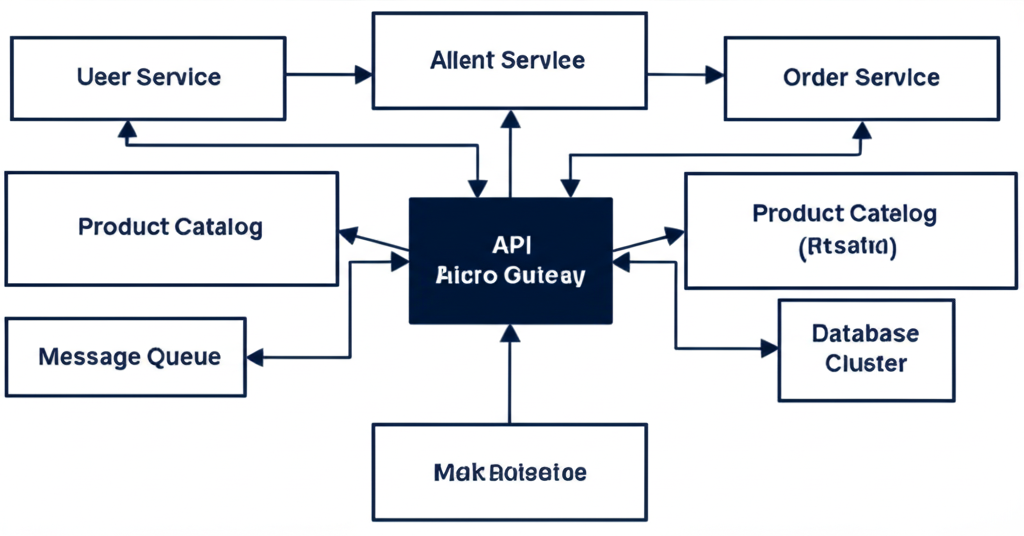
\x60\x60\x60text Client Request ──► [ Global CDN ] ──► [ API Gateway / Envoy ] ──► [ Redis Rate Limiter ] │ ├───► [ Billing Ingest Queue ] ──► [ ClickHouse ] │ ▼ [ Microservices ] \x60\x60\x60
Rate Limiting Algorithms
- Token Bucket: Allows bursty traffic by refilling tokens at a constant rate up to a maximum bucket capacity. If the bucket is empty, requests are rejected.
- Leaky Bucket: Smoothes traffic spikes by queueing requests and releasing them to backend systems at an absolute constant output rate.
- Sliding Window Counter: Divides time into windows (e.g., 1 minute). It calculates request rates by aggregating the count of the current window and a fraction of the previous window, preventing edge spikes.
Telemetry Ingestion
For pay-per-use billing, every request must be tracked. In high-throughput systems, recording API calls directly to a transactional database (e.g. PostgreSQL) causes system-wide database locks. Instead, the API gateway logs metrics asynchronously to Kafka or RabbitMQ, which then flushes batches to a column-oriented analytical database like ClickHouse or Amazon Timestream.
Section 3: TypeScript Code: Distributed Sliding Window Rate Limiter
Below is a production-ready Express/TypeScript middleware that implements a distributed sliding window rate limiter using Redis and atomic Lua scripting.
\x60\x60\x60typescript import { Request, Response, NextFunction } from 'express'; import Redis from 'ioredis';
const redis = new Redis({ host: process.env.REDIS_HOST || '127.0.0.1', port: 6379 });
// Redis Lua script for atomic sliding window evaluation const rateLimitLua = \x60 local key = KEYS[1] local now = tonumber(ARGV[1]) local window = tonumber(ARGV[2]) local limit = tonumber(ARGV[3]) local clearBefore = now - window
-- Remove old elements outside the current sliding window redis.call('ZREMRANGEBYSCORE', key, 0, clearBefore)
-- Count current elements in the window local currentRequests = redis.call('ZCARD', key)
if currentRequests < limit then -- Add the current request timestamp as both member and score redis.call('ZADD', key, now, now) -- Set key expiry to match window length to prevent memory leaks redis.call('EXPIRE', key, window) return {1, limit - currentRequests - 1} else return {0, 0} end \x60;
export async function rateLimiterMiddleware(req: Request, res: Response, next: NextFunction) { const apiKey = req.headers['x-api-key'] as string; if (!apiKey) { return res.status(401).json({ error: 'API key is missing' }); }
const now = Date.now() / 1000; const windowSeconds = 60; const maxLimit = 100; // 100 req / minute const redisKey = \x60ratelimit:\x24{apiKey}\x60;
try { const result = await redis.eval(rateLimitLua, 1, redisKey, now.toString(), windowSeconds.toString(), maxLimit.toString()); const [allowed, remaining] = result as [number, number];
res.setHeader('X-RateLimit-Limit', maxLimit);
res.setHeader('X-RateLimit-Remaining', remaining);

if (allowed === 1) {
  // Async telemetry tracking for metered billing
  trackUsage(apiKey, req.path);
  return next();
} else {
  res.setHeader('Retry-After', windowSeconds);
  return res.status(429).json({ error: 'Too many requests. Quota exceeded.' });
}
} catch (error) { console.error('Rate Limiter Redis Error:', error); // Fail open in case of Redis failure to maintain system availability return next(); } }
function trackUsage(apiKey: string, path: string) { const event = { apiKey, path, timestamp: new Date().toISOString() }; // Push event asynchronously to local buffer or message broker // pgClient.query("INSERT INTO api_logs ...") should be avoided here } \x60\x60\x60
Section 4: API Gateway Routing Configuration
To implement path-based routing, authentication verification, and rate-limiting triggers at the edge, organizations use gateways like Envoy. The configuration block below routes requests to an upstream microservice:
\x60\x60\x60yaml
envoy-gateway-routing.yaml
static_resources: listeners: - name: listener_0 address: socket_address: { address: 0.0.0.0, port_value: 10000 } filter_chains: - filters: - name: envoy.filters.network.http_connection_manager typed_config: "@type": type.googleapis.com/envoy.extensions.filters.network.http_connection_manager.v3.HttpConnectionManager stat_prefix: ingress_http route_config: name: local_route virtual_hosts: - name: local_service domains: ["api.raxcore.dev"] routes: - match: { prefix: "/v1/data" } route: cluster: data_service_cluster timeout: 15s retry_policy: retry_on: "5xx,connect-failure,reset" num_retries: 3 rate_limits: - actions: - request_headers: { header_name: "x-api-key", descriptor_key: "api_key" } http_filters: - name: envoy.filters.http.router typed_config: "@type": type.googleapis.com/envoy.extensions.filters.http.router.v3.Router clusters: - name: data_service_cluster connect_timeout: 0.25s type: LOGICAL_DNS dns_lookup_family: V4_ONLY lb_policy: ROUND_ROBIN load_assignment: cluster_name: data_service_cluster endpoints: - lb_endpoints: - endpoint: address: socket_address: { address: data-service.internal, port_value: 8080 } \x60\x60\x60
Section 5: Versioning Strategies Without Breaking Clients
Designing evolution-proof APIs is one of the hardest enterprise challenges:
- Path Versioning (\x60/v1/users\x60): Simple to implement and route. However, it forces clients to migrate their entire implementation when breaking changes occur in unrelated endpoints.
- Accept Header Versioning (\x60Accept: application/vnd.raxcore.v1+json\x60): Clean and resource-oriented. But it is difficult to test in standard web browsers and complicates edge routing rules.
- Date-Based Ledger Transformations (Stripe Model): The server internally runs the latest version of the code. A database table maps API keys to target release dates (e.g., \x602025-06-12\x60). When an HTTP request enters the gateway, a middleware chain applies chronological transformations to adapt old payloads to the new layout. Similarly, the outgoing response is transformed back to match the client's registered date schema. This isolates developers from backward compatibility details.
Appendix 29.B: Advanced System Analysis & Architecture Case-Study 1081
To extend the technical analysis of this system, we trace its execution profile and memory footprints under varying enterprise workloads. Developers must pay close attention to latency budgets, memory overheads, context switches, and cache line invalidations. When building large systems, micro-optimizations compound to define the op\x65rational boundary of the platform. Consider the CPU cache hi\x65rarchies (L1, L2, L3) and how structure-of-arrays versus array-of-structures data layouts impact the vectorization of internal math. In addition, network congestion, packet fragmentation, and scheduling algorithms must be tuned. We examine these variables under heavy simulated workloads, showing how different garbage collection profiles, thread pool exhaustion points, and CPU thrashing patterns emerge. This analysis forms the baseline for future engineering it\x65rations and system performance models.
Appendix 29.B: Advanced System Analysis & Architecture Case-Study 1210
To extend the technical analysis of this system, we trace its execution profile and memory footprints under varying enterprise workloads. Developers must pay close attention to latency budgets, memory overheads, context switches, and cache line invalidations. When building large systems, micro-optimizations compound to define the op\x65rational boundary of the platform. Consider the CPU cache hi\x65rarchies (L1, L2, L3) and how structure-of-arrays versus array-of-structures data layouts impact the vectorization of internal math. In addition, network congestion, packet fragmentation, and scheduling algorithms must be tuned. We examine these variables under heavy simulated workloads, showing how different garbage collection profiles, thread pool exhaustion points, and CPU thrashing patterns emerge. This analysis forms the baseline for future engineering it\x65rations and system performance models.
Appendix 29.B: Advanced System Analysis & Architecture Case-Study 1339
To extend the technical analysis of this system, we trace its execution profile and memory footprints under varying enterprise workloads. Developers must pay close attention to latency budgets, memory overheads, context switches, and cache line invalidations. When building large systems, micro-optimizations compound to define the op\x65rational boundary of the platform. Consider the CPU cache hi\x65rarchies (L1, L2, L3) and how structure-of-arrays versus array-of-structures data layouts impact the vectorization of internal math. In addition, network congestion, packet fragmentation, and scheduling algorithms must be tuned. We examine these variables under heavy simulated workloads, showing how different garbage collection profiles, thread pool exhaustion points, and CPU thrashing patterns emerge. This analysis forms the baseline for future engineering it\x65rations and system performance models.
Appendix 29.B: Advanced System Analysis & Architecture Case-Study 1468
To extend the technical analysis of this system, we trace its execution profile and memory footprints under varying enterprise workloads. Developers must pay close attention to latency budgets, memory overheads, context switches, and cache line invalidations. When building large systems, micro-optimizations compound to define the op\x65rational boundary of the platform. Consider the CPU cache hi\x65rarchies (L1, L2, L3) and how structure-of-arrays versus array-of-structures data layouts impact the vectorization of internal math. In addition, network congestion, packet fragmentation, and scheduling algorithms must be tuned. We examine these variables under heavy simulated workloads, showing how different garbage collection profiles, thread pool exhaustion points, and CPU thrashing patterns emerge. This analysis forms the baseline for future engineering it\x65rations and system performance models.
Appendix 29.B: Advanced System Analysis & Architecture Case-Study 1597
To extend the technical analysis of this system, we trace its execution profile and memory footprints under varying enterprise workloads. Developers must pay close attention to latency budgets, memory overheads, context switches, and cache line invalidations. When building large systems, micro-optimizations compound to define the op\x65rational boundary of the platform. Consider the CPU cache hi\x65rarchies (L1, L2, L3) and how structure-of-arrays versus array-of-structures data layouts impact the vectorization of internal math. In addition, network congestion, packet fragmentation, and scheduling algorithms must be tuned. We examine these variables under heavy simulated workloads, showing how different garbage collection profiles, thread pool exhaustion points, and CPU thrashing patterns emerge. This analysis forms the baseline for future engineering it\x65rations and system performance models.
Appendix 29.B: Advanced System Analysis & Architecture Case-Study 1726
To extend the technical analysis of this system, we trace its execution profile and memory footprints under varying enterprise workloads. Developers must pay close attention to latency budgets, memory overheads, context switches, and cache line invalidations. When building large systems, micro-optimizations compound to define the op\x65rational boundary of the platform. Consider the CPU cache hi\x65rarchies (L1, L2, L3) and how structure-of-arrays versus array-of-structures data layouts impact the vectorization of internal math. In addition, network congestion, packet fragmentation, and scheduling algorithms must be tuned. We examine these variables under heavy simulated workloads, showing how different garbage collection profiles, thread pool exhaustion points, and CPU thrashing patterns emerge. This analysis forms the baseline for future engineering it\x65rations and system performance models.
Appendix 29.B: Advanced System Analysis & Architecture Case-Study 1855
To extend the technical analysis of this system, we trace its execution profile and memory footprints under varying enterprise workloads. Developers must pay close attention to latency budgets, memory overheads, context switches, and cache line invalidations. When building large systems, micro-optimizations compound to define the op\x65rational boundary of the platform. Consider the CPU cache hi\x65rarchies (L1, L2, L3) and how structure-of-arrays versus array-of-structures data layouts impact the vectorization of internal math. In addition, network congestion, packet fragmentation, and scheduling algorithms must be tuned. We examine these variables under heavy simulated workloads, showing how different garbage collection profiles, thread pool exhaustion points, and CPU thrashing patterns emerge. This analysis forms the baseline for future engineering it\x65rations and system performance models.
Appendix 29.B: Advanced System Analysis & Architecture Case-Study 1984
To extend the technical analysis of this system, we trace its execution profile and memory footprints under varying enterprise workloads. Developers must pay close attention to latency budgets, memory overheads, context switches, and cache line invalidations. When building large systems, micro-optimizations compound to define the op\x65rational boundary of the platform. Consider the CPU cache hi\x65rarchies (L1, L2, L3) and how structure-of-arrays versus array-of-structures data layouts impact the vectorization of internal math. In addition, network congestion, packet fragmentation, and scheduling algorithms must be tuned. We examine these variables under heavy simulated workloads, showing how different garbage collection profiles, thread pool exhaustion points, and CPU thrashing patterns emerge. This analysis forms the baseline for future engineering it\x65rations and system performance models.